Agreeing and Disagreeing Politely | 28-day Free Course

Agreeing and Disagreeing Politely
Mastering the art of agreeing and disagreeing is an essential component of effective communication in English. These skills facilitate meaningful exchanges and foster understanding between individuals. When expressing agreement or disagreement, the way one articulates their thoughts can profoundly impact the dynamics of conversation.
Agreeing allows individuals to show support and affirmation towards another person’s opinion, creating a positive atmosphere. Conversely, disagreeing, when done respectfully and thoughtfully, encourages constructive dialogue and the exchange of diverse perspectives. As such, knowing how to approach these interactions with politeness is paramount. It not only demonstrates respect for the other person’s viewpoint but also enhances the likelihood of a fruitful discussion, even in the face of differing opinions.
Politeness in communication plays a significant role in building and maintaining good relationships. When individuals feel respected and valued in a conversation, they are more likely to engage openly and honestly. This creates an environment conducive to collaboration and mutual understanding. Furthermore, being polite when agreeing or disagreeing can prevent misunderstandings and mitigate conflict, allowing for a smoother exchange of ideas.
Incorporating politeness strategies, such as softening language and using conditional phrases, can transform a potentially contentious conversation into a more amicable discussion. By utilizing phrases like “I see your point, but…” or “I appreciate your opinion, however…”, speakers can navigate disagreements without alienating the other person. Understanding the nuances of agreeing and disagreeing is therefore not only practical but essential for effective communication in various contexts.
👉 Table of Contents 👇
Why is Politeness Important?
Politeness holds a significant place in English-speaking cultures, serving as a cornerstone for effective communication and interpersonal relationships. It reflects respect, understanding, and consideration towards others, facilitating more constructive dialogues, whether one agrees or disagrees with the opinions expressed. The use of polite language can mitigate conflicts and create an atmosphere of mutual respect, allowing individuals to engage in discussions without fear of alienation or offense.
In everyday conversations, displaying politeness often involves using certain expressions and phrases that convey an understanding of the other person’s viewpoint, even when differing perspectives arise. For instance, when agreeing, phrases such as “I completely agree with your point” or “That’s an excellent viewpoint; I see where you’re coming from” can enhance a sense of camaraderie. Conversely, when disagreeing, polite responses such as “I see your perspective, but I have a different take on this” or “That’s an interesting idea, however, I believe…” allow for the expression of dissent without causing brittle feelings.
Furthermore, politeness can shape societal norms and etiquette, influencing how individuals are perceived and treated. In professional settings, demonstrating politeness is crucial as it can impact career progression, teamwork, and overall workplace harmony. Employers and colleagues alike are more likely to respect and appreciate individuals who communicate thoughtfully and respectfully. This balance of politeness in discourse can pave the way for open and honest exchanges, fostering an environment where individuals feel valued and heard.
Thus, understanding the role of politeness in communication is essential for anyone navigating English-speaking contexts. A commitment to respectful dialogue can yield substantial benefits, making conversations not only more agreeable but also more productive.
Basic Phrases for Agreeing
Agreeing with someone in a conversation can foster a positive and collaborative atmosphere. It is essential to express agreement in a polite manner, which can be achieved through the use of simple phrases. One of the most straightforward expressions is “Yes, I agree.” This phrase signifies a clear acknowledgment of the other person’s viewpoint. Additionally, you might say,”That’s a good point,” which not only indicates agreement but also recognizes the validity of the other person’s argument. These phrases can be employed in various contexts, whether in meetings, discussions, or casual conversations.
To enrich these basic expressions, consider adding personal thoughts or feelings. For instance, you could say, “Yes, I agree; I have experienced something similar in the past.” This not only shows your agreement but also personalizes the conversation, making it more engaging. You can further elaborate with phrases such as, “I feel that you make a valid point regarding…” This approach allows you to express your opinion while reinforcing agreement.
Another effective way to agree is by saying, “Absolutely! I think the same way.” This variant adds enthusiasm to your agreement, making it clear to the speaker that you genuinely support their viewpoint. Using these expressions can enhance your communication skills, thereby creating a more harmonious dialogue.
In summary, utilizing phrases like “Yes, I agree” or “That’s a good point,” along with personalized touches, can significantly improve the way we engage with others. Employing these strategies facilitates a respectful exchange of ideas, vital in both personal and professional interactions.

Basic Phrases for Disagreeing
Disagreeing with someone can be a challenging endeavor, particularly in a professional or social setting where maintaining relationships is essential. Using polite language is key to expressing disagreement constructively and respectfully. Incorporating well-articulated phrases as tools can significantly facilitate this process.
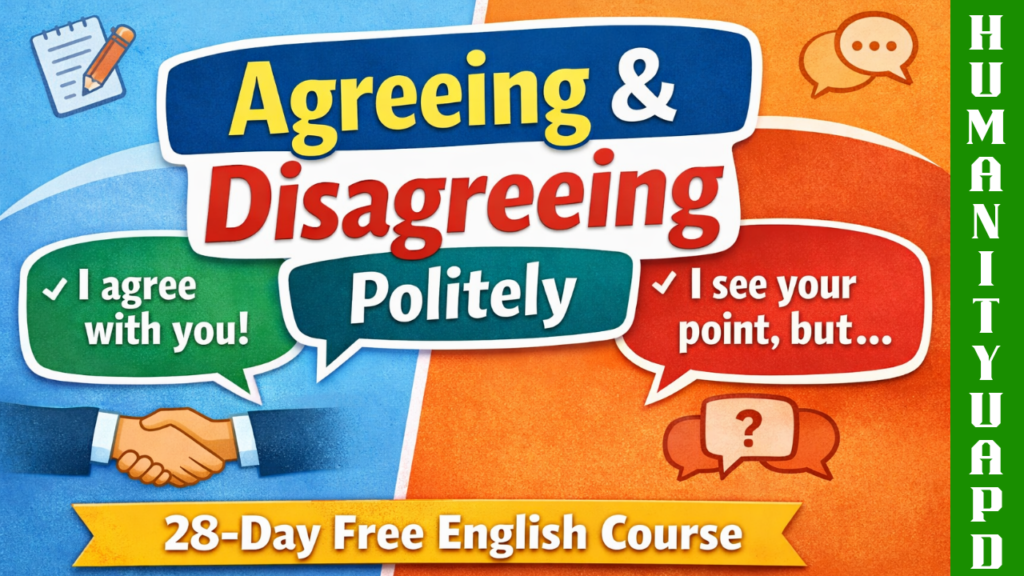
One commonly used phrase is, “I see your point, but…” This expression acknowledges the other person’s opinion while gently introducing your own perspective. By validating their argument beforehand, you mitigate potential defensiveness and pave a smoother pathway for constructive dialogue.
Another useful phrase to express disagreement is, “I’m not sure I agree.” This expression opens the floor for discussion without diminishing the other person’s views. It signals that you respect their input while also communicating your differing opinion. Such phrases encourage a two-way communication approach, allowing for a richer exchange of ideas.
You might also consider saying, “That’s an interesting perspective; however…” This phrase emphasizes your understanding and curiosity regarding the other person’s viewpoint while seamlessly transitioning to presenting your counterargument. This method enhances clarity and demonstrates that you value the conversation, even when you hold a different stance.
Additionally, using phrases like, “While I appreciate your opinion, I believe…” can effectively express your disagreement in a cordial manner. It maintains the focus on the discussion rather than turning it into a debate, allowing for constructive exchanges.
Implementing these phrases into your everyday conversations can aid beginners in navigating disagreements more gracefully. The art of disagreement lies in balancing honesty with respect, and incorporating such expressions contributes significantly to achieving that balance.
Using Non-Verbal Cues
Effective communication extends beyond the words we speak; it significantly encompasses the non-verbal cues we employ to convey our messages. In discussions where agreement or disagreement is expressed, understanding body language and tone can greatly influence the impact of our responses. Non-verbal signals often provide essential context and can enhance or contradict verbal communication.
Body language, for instance, plays a critical role in how our agreement or disagreement is perceived. When assent is conveyed, individuals might nod their heads, maintain an open posture, and lean slightly forward to show engagement and approval. Conversely, crossing arms, maintaining distance, or turning away can communicate disagreement or discomfort. These gestures serve as a visual extension of our feelings, emphasizing or mitigating our spoken responses.
Additionally, tone of voice is pivotal in shaping the meaning behind our words. A warm, enthusiastic tone can reinforce agreement, making the listener feel valued and understood. On the other hand, a flat or dismissive tone can suggest disagreement even if the words used are non-confrontational. It is crucial to align tone with intent to foster effective dialogue.
For example, if one person states, “I think we should pursue this project,” and the response is accompanied by a firm nod and an upbeat tone, it clearly indicates agreement. In contrast, if the reply is accompanied by an eye-roll or a heavy sigh, it subtly signals resistance or reluctance, despite potentially polite wording. By paying attention to these non-verbal cues, individuals can better navigate the complexities of discussion, whether in agreement or disagreement, leading to more effective communication outcomes.
Practicing Agreeing and Disagreeing
Engaging in constructive conversations often requires the ability to agree and disagree with others in a polite manner. To enhance these skills, various activities can be implemented to allow individuals to practice expressing their viewpoints respectfully. One effective method is through role-plays, where participants can assume different personas and engage in discussions on a range of topics. This not only builds confidence but also equips individuals with strategies to navigate disagreements effectively.
For example, a simple role-play scenario could involve two friends discussing their favorite movies. One can assume the role of a passionate supporter of a specific film, while the other might favor a different genre. The goal is not to win the argument but to articulate their reasoning clearly and validate the other’s perspective. This method encourages participants to listen actively and respond thoughtfully, fostering a respectful exchange of opinions.
In addition to role-plays, structured conversations can also serve as an excellent platform for practicing polite disagreement. Participants could be grouped into pairs and given specific statements to discuss. Each pair would then take turns either agreeing with or presenting a contrasting viewpoint to strengthen their reasoning skills. This exercise emphasizes the importance of using polite language and maintaining an open attitude during conversations. Furthermore, it provides a safe environment for individuals to explore the nuances of communication, facilitating a greater understanding of differing opinions.
To make the learning experience engaging, incorporating games can also prove beneficial. Activities such as debates or discussion circles can encourage participants to express their thoughts in a fun and interactive way. By regularly practicing these techniques, individuals will become more adept at handling disagreements, ensuring that discussions remain constructive and civil.
Real-Life Examples
Polite communication is essential in our daily interactions, whether in formal meetings or casual conversations. Here are a few examples that illustrate how agreeing and disagreeing can occur gracefully in different contexts.
In a professional setting, imagine a team meeting where innovative ideas are being discussed. One team member, Sarah, proposes a new marketing strategy. John, another team member, while recognizing Sarah’s efforts, gently disagrees:
“I appreciate your approach, Sarah, and I can see the potential benefits. However, I believe we should also consider our existing strategy, which has yielded positive results. Perhaps we can merge these ideas for a more comprehensive plan?”
Here, John uses polite expressions by appreciating Sarah’s input while presenting his differing opinion respectfully. This fosters a constructive dialogue that encourages collaboration.
In informal conversations among friends, see how one might agree or disagree over a movie choice. For instance, Lisa suggests watching a thriller:
“I think we should watch ‘The Quiet Place.’ It’s thrilling and has great reviews!”
Tom, who prefers comedies, responds:
“That does sound interesting, Lisa. Though, I must admit, I’m feeling more like a light-hearted movie tonight. Maybe we can save that one for another time?”
This exchange highlights how friends can express their preferences while acknowledging each other’s suggestions. Tom doesn’t dismiss Lisa’s idea outright but instead offers an alternative that aligns with his mood.
By integrating polite expressions and showing appreciation for the other person’s point of view, these examples illustrate effective strategies for agreeing and disagreeing in diverse settings. Practicing such dialogues can enhance one’s ability to communicate respectfully and persuasively.

Common Mistakes to Avoid
Navigating conversations where agreement and disagreement occur can be intricate, and several common pitfalls can hinder effective communication. A prevalent mistake is sounding too harsh or confrontational when expressing disagreement. Utilizing an aggressive tone can exacerbate tensions and lead to misunderstandings. To mitigate this, individuals should focus on softening their language and adopting a more diplomatic approach. This may include using phrases that express understanding of the other person’s perspective while respectfully offering a differing opinion. Phrasing one’s disagreement as personal insight rather than an outright rejection can foster a more collaborative atmosphere.
Another mistake often encountered is being too vague in responses, particularly when agreeing. Vague endorsements can leave others unsure about the level of support or understanding. To avoid this, it is beneficial to articulate specific reasons for agreement. For instance, instead of merely stating “I agree,” one might say, “I agree because your point about shared responsibilities resonates with my experiences.” This not only clarifies one’s stance but also encourages deeper discussion.
Furthermore, interrupting others or dominant speaking can prevent a balanced exchange of ideas. Striving for active listening is crucial; this demonstrates respect for the opposing viewpoint and allows for thoughtful responses. By practicing patience and allowing others to express themselves fully, an individual can foster a more productive dialogue.
Lastly, failing to recognize non-verbal cues such as body language or tone can lead to miscommunication. Being attuned to these signals can provide insight into how one’s message is being received, allowing for adjustments to be made as needed. Thus, by avoiding these common mistakes, individuals can engage in constructive discussions that encourage mutual understanding and respect.
Conclusion and Next Steps
In this final segment, we will reflect on the importance of agreeing and disagreeing politely in everyday conversations. The ability to express agreement or disagreement in a respectful manner is essential for effective communication. Throughout this course, we have highlighted various techniques such as active listening, acknowledging others’ viewpoints, and using polite language. These techniques aim not only to foster mutual respect but also to facilitate constructive dialogue.
Moreover, we have examined various scenarios where the application of these strategies could drastically improve interpersonal interactions. Understanding how to navigate disagreements without escalating tension is crucial, particularly in diverse environments, whether in professional settings or personal relationships. Approaching conversations with an open mind can lead to more fruitful discussions and enhanced cooperation.
Having covered these essential skills, we encourage you to apply what you have learned in real-life situations. Start by practicing these concepts in your conversations, gradually becoming more comfortable with the nuances of agreeing and disagreeing politely. Remember that communication is a skill that improves with practice and reflection.
Looking ahead, the next topic in our 28-day course will delve into the art of persuasion and influence. This upcoming section will provide strategies to complement your skills in polite communication, enabling you to not only express your opinions but to do so in a way that positively influences others. Stay engaged as we continue to explore the dynamics of effective communication. Your journey to becoming a more persuasive communicator begins here.
FAQs – Agreeing and Disagreeing Politely
What does agreeing politely mean in English?
Agreeing politely means expressing that you support or accept someone’s opinion in a respectful and friendly way. Instead of simply saying “Yes,” you can use phrases like “I agree with you,” “That’s a good point,” or “Absolutely.” These expressions help create positive and comfortable conversations.
What does disagreeing politely mean?
Disagreeing politely means expressing a different opinion without sounding rude or disrespectful. It involves acknowledging the other person’s viewpoint before sharing your own idea. For example, you can say “I see your point, but I think differently” or “That’s an interesting idea, however I have another perspective.”
Why is it important to agree and disagree politely?
Agreeing and disagreeing politely is important because it helps maintain respect, healthy relationships, and constructive communication. Polite conversations reduce misunderstandings and encourage open discussions where everyone feels comfortable sharing their opinions.
What are some common phrases for agreeing in English?
Some common phrases used to show agreement include:
– I agree with you.
– That’s a good point.
– Absolutely!
– You’re right.
– I think the same way.
These phrases help show support for another person’s opinion.
What are polite ways to disagree in English?
Polite ways to disagree include:
– I see your point, but…
– I’m not sure I agree.
– That’s interesting, however…
– I understand your opinion, but…
– I respect your view, although…
These phrases help keep conversations respectful even when opinions differ.
How can body language help when agreeing or disagreeing?
Body language plays an important role in communication. Nodding, smiling, maintaining eye contact, and speaking calmly can show respect and interest during a conversation. Positive body language helps make discussions more comfortable and friendly.
What mistakes should learners avoid when disagreeing?
Common mistakes include:
– Sounding rude or aggressive
– Interrupting the other person
– Ignoring the other person’s opinion
– Using very direct negative statements
Instead, learners should listen carefully and respond politely.
How can beginners practice agreeing and disagreeing politely?
Beginners can practice by:
– Having conversations with friends
– Doing role-play discussions
– Watching English conversations in videos
– Practicing polite phrases daily
Regular practice helps improve confidence and communication skills.
Where are polite agreement and disagreement used?
These communication skills are used in many situations, including:
– Workplace meetings
– Classroom discussions
– Friendly conversations
– Online discussions
– Debates and presentations
Learning these skills helps you communicate more effectively in English-speaking environments.
How can I improve my English communication skills quickly?
You can improve your English communication skills by:
– Practicing speaking every day
– Learning useful conversation phrases
– Listening to English videos and podcasts
– Reading English articles
– Joining English-speaking communities
Consistency and daily practice are the key to becoming fluent.
Share this:

