
English Alphabet and Sounds: Easy Pronunciation Guide (2026)

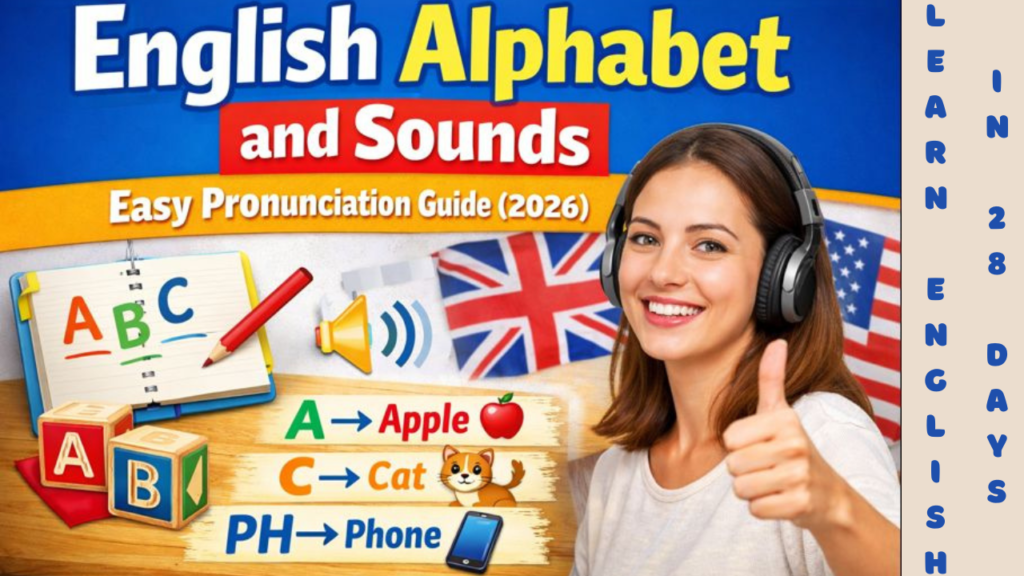
English Alphabet and Sounds
The English alphabet consists of 26 letters, ranging from A to Z, and serves as a fundamental building block of written communication in the English language. This alphabet is a key component of literacy, playing a crucial role in both reading and writing processes. Understanding the structure of the English alphabet is essential for language learners, educators, and individuals seeking to improve their communication skills.
The origins of the English alphabet can be traced back to ancient cultures, specifically the Latin script, which was derived from the Etruscan and Greek alphabets. Over centuries, this system has evolved, integrating various linguistic influences and adaptations that reflect historical changes in society and culture. Today, the English alphabet provides a systematic approach to phonetics and syntax, enabling individuals to construct words and sentences effectively.
Beyond its function in forming words, the English alphabet holds significant significance in numerous aspects of daily life. From education and literature to social media and digital communication, it facilitates the sharing of ideas, emotions, and information. The alphabet also serves as a reference point for various activities, such as categorization and organization in both academic and professional settings.
In a multicultural world, the English alphabet often acts as a bridge between diverse languages and dialects, fostering greater understanding and collaboration. Therefore, recognizing the historical journey and the contemporary importance of the English alphabet is vital for appreciating its role in shaping modern communication. The alphabet remains not only a tool for conveying thoughts but also a symbol of literacy and knowledge in our society.
👉 Table of Contents 👇
Historical Evolution of the English Alphabet
The English alphabet, which comprises 26 letters, has a rich and intricate history that traces back to ancient civilizations. Its origins can be primarily linked to the Phoenician alphabet, which is one of the earliest known alphabets in history. The Phoenicians created a writing system around 1200 BCE that consisted of 22 consonant letters. This system laid the groundwork for various alphabetic scripts that followed.
The Greek alphabet, which originated from the Phoenician script around the 8th century BCE, marked a significant milestone in the evolution of writing. The Greeks adapted the Phoenician characters to include vowels, thus enhancing the representation of their spoken language. This adaptation allowed for a more flexible and expressive means of communication. Over time, the Greek alphabet influenced many other writing systems, including that of the Romans.
During the expansion of the Roman Empire, the Latin alphabet emerged as it assimilated and adapted letters from the Greek and Etruscan alphabets. The Latin alphabet, which initially comprised only 21 letters, became the standard script throughout the vast territories of the empire. This alphabet served as the basis for the modern English script. With the introduction of the letters ‘J,’ ‘U,’ and ‘W’ during the Middle Ages, the English alphabet gradually transformed into its present form.
The invention of the printing press in the 15th century played a vital role in standardizing the English alphabet. The increased dissemination of written materials ensured that the alphabet’s structure was consistently applied. Furthermore, the Renaissance period saw an expansion in vocabulary and the incorporation of many foreign words into the English language, further enriching the use of the alphabet.
In summary, the historical evolution of the English alphabet is marked by a series of transformations and adaptations from ancient scripts to its modern incarnation, reflecting not only the linguistic changes but also the cultural exchanges across various civilizations.
The Structure of the English Alphabet
The English alphabet is comprised of 26 distinct letters, each with a unique role in the composition of words and language. These letters are divided into two cases: upper-case and lower-case. Upper-case letters, generally employed at the beginning of sentences and for proper nouns, serve to provide emphasis or denote the importance of a particular word. Conversely, lower-case letters are predominantly used in the majority of text, contributing to the flow and readability of written language.
Within the English alphabet, the letters can also be categorized into vowels and consonants. There are five primary vowels: A, E, I, O, and U. These vowels play a crucial role in the phonetic structure of words, often serving as the nucleus of syllables. The presence of vowels allows for the creation of syllables, which are the building blocks of words, facilitating pronunciation and rhythm in speech.
In contrast, the consonants, which consist of the remaining 21 letters, include a variety of sounds that supplement the vowels to form complete words. Each consonant letter represents a distinct sound, enhancing the variety and complexity of the language. Some consonants can be classified further into voiced and voiceless sounds, contributing to the richness of phonetic expression within English. Understanding these distinctions is essential for mastering pronunciation, spelling, and overall communication.
The structure of the English alphabet is underpinned by the interplay between these vowels and consonants, illustrating their integral roles in phonetics and linguistics. By examining how these letters function individually and collectively, one gains greater insight into the foundational aspects of the English language.

Phonetics and the English Alphabet
The English alphabet consists of 26 letters, each serving as a fundamental component in the representation of spoken sounds. Phonetics, the study of these sounds, provides insights into how letters symbolize specific phonemes, the smallest units of sound that alter meaning in a language. Within the realm of phonetics, the correspondence between letters and sounds is not always straightforward, as the same letter can represent different sounds depending on its context, and different letters can represent the same sound.
Phonemic awareness is crucial in understanding the relationship between the English alphabet and spoken language. This awareness involves recognizing that words are made up of sounds that can be segmented and manipulated. For instance, the letter ‘c’ in ‘cat’ represents a hard /k/ sound, while in ‘cell,’ it produces a soft /s/ sound. Such variations demonstrate the complexity of phonetic representation in English.
The combination of phonetics and the English alphabet develops foundational literacy skills in learners. By focusing on phonemes and their corresponding graphemes—the written representation of sounds—individuals gain an understanding of how to decode and encode words effectively. This skill has implications for both reading and spelling, as well as for further language acquisition. Phonetic transcription, which uses symbols to denote sounds accurately, can offer learners an additional layer of clarity when mastering the nuances of English pronunciation.
Moreover, the interplay between phonetics and the English alphabet underscores the importance of teaching strategies that foster an awareness of sounds. Effective phonics instruction, characterized by systematic and explicit teaching of sound-letter relationships, can facilitate a smoother transition into competent reading and writing. Thus, the English alphabet, while a straightforward sequence of letters, serves a complex role in phonetic representation that is essential for language comprehension.
Alphabetical Order: Importance and Usage
Alphabetical order is a systematic arrangement of words, names, or phrases according to the sequence of the letters in the alphabet. This method of organization is crucial across various fields, as it provides a familiar framework for locating and retrieving textual information efficiently. The significance of alphabetical order is most prominently observed in dictionaries and encyclopedias, where entries are organized to facilitate quick access and readability.
In dictionaries, for instance, every word is listed according to the first letter, followed by subsequent letters. This arrangement enables users to locate definitions expeditiously, fostering an intuitive search experience. Similarly, encyclopedias utilize alphabetical order to present vast information in an easily navigable format. The structured layout not only enhances user experience but also standardizes the retrieval process, making it accessible to a wide audience.
Furthermore, alphabetical order finds application in digital databases, where it aids in the sorting of information such as names, addresses, and titles. As a result, users can streamline data organization and ensure that information can be efficiently found without unnecessary delays. The importance of this system extends even into everyday tasks, such as organizing files or contacts, where alphabetical arrangements simplify management and retrieval, thereby promoting higher productivity levels.
In educational settings, the understanding of alphabetical order is integral to developing foundational literacy skills. Students learn to recognize letters and understand their sequences, which plays a vital role in language acquisition and word recognition. Overall, the usage of alphabetical order permeates various aspects of life, proving to be an essential organizational tool that enhances clarity and efficiency in our interactions with information.
Variations and Adaptations of the English Alphabet
The English alphabet, composed of 26 letters, has undergone various adaptations and variations across different dialects and regions. This versatility has significantly shaped the manner in which the English language is spoken and written, resulting in multiple versions suited to local communication styles.
A notable aspect of the English alphabet is its use in various English dialects, such as British, American, Australian, and Indian English. Each dialect may exhibit unique phonetic characteristics and peculiarities in pronunciation, which can sometimes necessitate subtle adaptations in spelling and usage. For example, in British English, words like “colour” and “favour” maintain an additional letter that is often omitted in American English, where they appear as “color” and “favor.” These differences highlight the diverse applications of the English alphabet across the globe.
Furthermore, the impact of the English alphabet extends beyond the confines of the English language, influencing many other languages as well. Numerous languages utilize Latin scripts derived from the English alphabet, incorporating unique diacritical marks and additional letters to fit their phonological systems. For instance, languages such as Vietnamese and Turkish have adopted the Latin script but include additional letters and accents to accurately express sounds not found in English. As a result, the English alphabet serves not only as a foundational writing system for English speakers but also as a bridge that connects with various language systems worldwide.
In addition to geographical differences, cultural and technological advancements continue to affect the evolution of the English alphabet. The rise of digital communication, including texting and social media, has introduced new abbreviations and symbols, leading to further adaptations. The English alphabet will likely continue to evolve and adapt as it interacts with diverse linguistic communities, reshaping how it is perceived and utilized across the globe.
Teaching the English Alphabet
Teaching the English alphabet effectively involves several strategies tailored to suit the learning needs of children and second language learners. An effective approach is to incorporate phonics, which links sounds to letters. This method helps learners not only identify letters but also understand their corresponding sounds, making it easier to form words. Utilizing songs and rhymes related to the alphabet can enhance memorization and make learning enjoyable.
Another beneficial strategy is the use of visual aids such as flashcards, charts, or interactive digital tools that engage learners visually. Children tend to retain information better when it is presented in a colorful and dynamic format. Activities such as letter tracing or matching games can further reinforce their understanding and recognition of the English alphabet.
Incorporating hands-on activities into lessons is also essential for teaching the English alphabet. For instance, using physical letters made of magnet or foam can allow learners to manipulate the alphabet while developing motor skills. Similarly, storytelling that emphasizes the use of the alphabet can improve comprehension while providing contextual understanding.
When teaching second language learners, it is important to consider their native language and any similarities or differences to the English alphabet. Employing bilingual resources can bridge understanding, facilitating smoother transitions into learning an entirely new script. Language apps and online resources available today can also provide interactive ways to practice letter recognition and pronunciation.
Overall, teaching the English alphabet necessitates a combination of various strategies and resources to accommodate different learning styles. Through consistency and creativity, educators can help learners build a solid foundation in understanding the English alphabet, setting the stage for further language development.

Cultural Significance of the English Alphabet
The English alphabet, consisting of 26 letters, holds immense cultural significance that extends beyond mere communication. Its influence can be seen throughout literature, art, and various cultural expressions. From the earliest days of written English, the alphabet has served as a foundation for storytelling, poetry, and scholarly discourse, enabling the preservation and sharing of knowledge across generations.
In literature, the English alphabet has played a pivotal role in shaping the works of renowned authors. For instance, William Shakespeare, whose mastery of the language helped elevate English literature to new heights, utilized the alphabet to create intricate sonnets and plays that continue to resonate today. Similarly, the works of poets such as Emily Dickinson and Robert Frost exemplify the rich emotional landscape that can be crafted with these 26 letters.
Moreover, the English alphabet has significantly impacted art and visual culture. The incorporation of letters into visual art forms—such as those seen in contemporary movements like Pop Art—demonstrates how artists have harnessed the alphabet to convey messages, provoke thought, and challenge societal norms. Artists like Jasper Johns and Barbara Kruger have utilized the English letters not just as symbols but as integral components of their artistic expression, blurring the lines between text and image.
Beyond literature and art, the alphabet’s influence extends into education and technology. The English script is fundamental in teaching reading and writing skills, forming the basis for literacy programs worldwide. Additionally, with the advent of the internet and digital communication, the English alphabet has gained global prominence, facilitating a shared means of expression across cultures and languages.
In summary, the cultural significance of the English alphabet is undeniable. It has shaped not only the literary and artistic landscapes but also the way we convey thoughts and ideas. As we continue to explore the layers of its impact, it becomes clear that the English alphabet is more than just a set of letters; it is a vital thread that weaves through the fabric of human culture.
Conclusion and Future of the English Alphabet
The English alphabet, a dynamic and evolving system, has undergone significant transformations throughout its history. From its origins in ancient scripts to its establishment as a global lingua franca, the alphabet reflects both cultural and linguistic shifts. As explored in the previous sections, its 26 letters serve as the foundation for a broad array of words, enabling diverse forms of expression and communication.
In recent years, advancements in technology have further influenced the use and adaptation of the English alphabet. The rise of digital communication, particularly through social media and texting, has led to the emergence of shorthand, emojis, and other symbolic representations that challenge traditional writing norms. Despite these changes, the underlying structure of the English alphabet remains intact, serving as a vital tool for literacy and engagement in a globalized society.
Looking ahead, it is essential to recognize the potential for continued evolution in the use of the English alphabet. As non-native speakers increasingly adopt English as a second language, the alphabet may adapt to accommodate new sounds and linguistic nuances that arise from diverse cultural contexts. Additionally, the incorporation of artificial intelligence and machine learning could revolutionize the way we study and interact with language, offering new methods for learning and communication that transcend the conventional printed word.
In conclusion, the future of the English alphabet lies at a unique intersection of tradition and innovation. As we move forward in this digital age, it is crucial to both cherish the historical significance of the English alphabet and embrace its ability to adapt to contemporary needs. Navigating this balance will ensure that the alphabet continues to serve as a powerful medium for sharing ideas and connecting people across the globe.
FAQs: English Alphabet and Sounds
How many letters are there in the English alphabet?
The English alphabet has 26 letters, from A to Z. These letters are used to form all English words, sentences, and sounds.
Why does English pronunciation feel difficult?
English pronunciation can feel difficult because one letter can have multiple sounds. This is normal. With regular listening and speaking practice, pronunciation becomes much easier.
How many vowels are there in English?
There are 5 main vowels in English: A, E, I, O, U. Vowels are very important because every English word includes a vowel sound.
Is it necessary to learn phonetics to speak English?
No. Beginners do not need to learn phonetic symbols. Listening carefully, repeating words, and practicing daily is enough to improve pronunciation.
How can I practice English alphabet sounds daily?
You can practice by:
– Reading letters aloud
– Listening and repeating simple words
– Watching pronunciation videos
– Practicing for 10–15 minutes every day
Platforms like HumanityUAPD focus on simple, step-by-step practice to make this easier.

Share this:

