
English for Travel and Public Places | 28-Day Free Course

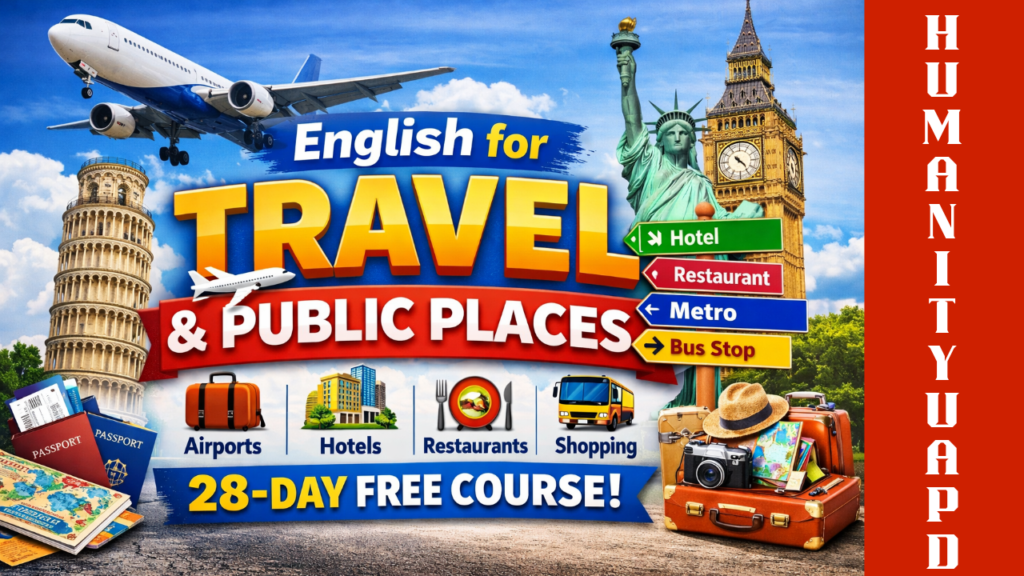
English for Travel and Public Places
In today’s globalized world, English has emerged as a dominant language, particularly in the realms of travel and public places. Whether you are embarking on a journey to a foreign country or navigating the local amenities in your own city, the ability to communicate in English can significantly enhance your experience. This blog post aims to highlight the importance of mastering English for travel purposes, detailing how it can facilitate interactions, improve sightseeing experiences, and foster a deeper understanding of diverse cultures.
When traveling, encountering situations where English is the primary mode of communication is almost inevitable. From checking into a hotel to ordering food at a restaurant or asking for directions, knowing English can serve as a vital tool for overcoming language barriers. Even in regions where English is not the first language, it is often understood by locals in tourist areas. This understanding allows travelers to engage more meaningfully with the people and places they visit.
Moreover, navigating public places such as airports, train stations, and tourist attractions often requires basic communication skills in English. Signs, announcements, and information desks overwhelmingly utilize English, making it essential to grasp at least fundamental phrases and vocabulary. Familiarity with English or simple English expressions can make travel less daunting and more enjoyable.
Encouragingly, learning English for travel is not as demanding as it may seem. Resources abound in the form of language apps, online courses, and conversational practice groups tailored to beginners. With commitment and practice, anyone can develop the necessary skills to communicate effectively while traveling. The aim of this blog post is to provide insights on how acquiring English language skills can enrich your travel experiences and help bridge cultural gaps during your adventures.
👉 Table of Contents 👇
Basic Travel Vocabulary
When preparing for travel, it is essential to familiarize oneself with basic travel vocabulary. This vocabulary encompasses various modes of transport, common locations, and helpful phrases that aid in navigation and communication.
Transportation forms a crucial component of travel. The most common types include airplane, train, bus, and taxi. For example, when arriving at an airport, travelers should look for signs indicating where to find buses or taxis. An example phrase could be, “Where can I find a taxi?” This knowledge not only facilitates smoother transitions but also enhances the travel experience.
Common places encountered during travels include hotels, restaurants, museums, and shopping centers. Knowing how to ask for directions to these locations can be extremely helpful. For instance, a traveler might ask, “How do I get to the nearest restaurant?” or “Is there a hotel nearby?” Familiarity with these terms allows individuals to interact confidently with locals or assistance staff in various settings.
Additionally, understanding how to seek directions is vital for navigating new environments. Useful directional vocabulary includes left, right, straight, and around the corner. Phrases like “Can you tell me how to get to the train station?” or “Is the museum far from here?” assist in acquiring effective guidance.
In conclusion, building a basic travel vocabulary is fundamental for anyone intending to explore new destinations. By mastering essential terms related to transportation, locations, and directions, travelers can enhance their journey, fostering positive experiences while discovering the world around them.
Common Phrases for Asking Directions
Traveling in unfamiliar places can often lead to confusion, especially when it comes to navigation. Knowing how to ask for directions can greatly enhance your travel experience. Here are several common phrases that can be employed effectively when you find yourself needing assistance in public spaces.
When approaching someone to ask for directions, it is best to start with a polite greeting. A simple “Excuse me” or “Hello” can break the ice and make the interaction more pleasant. Follow this with a clear question, such as, “Could you help me find [destination]?” For instance, “Could you help me find the nearest subway station?” This phrase is direct and can easily be understood by most English speakers.
Another useful phrase is, “I’m looking for [place]. Can you point me in the right direction?” This invites the person to provide guidance, potentially even drawing a map or indicating a route verbally. You might also hear, “Is [place] far from here?” to clarify the distance, allowing you to gauge whether to walk or use public transport.
When receiving directions, it’s important to confirm your understanding. You can say, “So I need to go straight, then turn left?” This repetition not only helps you remember the instructions but also shows the speaker you are listening actively. Additionally, it can open room for further clarification if needed.
Remember to express gratitude after receiving help. A simple “Thank you so much!” shows appreciation and leaves a positive impression on the person helping you. By using these common phrases, travelers can navigate new environments more confidently, enhancing their overall travel experiences.

Public Transportation in English-Speaking Countries
Using public transportation is a vital part of navigating cities in English-speaking countries. Buses, trains, and taxis offer convenient ways to travel, provided one is familiar with the key terms and phrases associated with these modes of transport. Understanding the lingo can significantly enhance the overall travel experience.
When taking a bus, one might encounter terms such as “fare,” which refers to the price of the ticket. Before boarding, passengers often need to purchase a ticket either from a machine, a ticket office, or directly from the bus driver. It is advisable to have cash on hand in smaller denominations, as not all drivers may accept credit cards. Additionally, understanding bus schedules is important; they typically display departure times and routes. Familiar phrases may include “Does this bus go to…?” or “Where can I find the bus stop?” which can be useful when asking for directions.
Train travel similarly requires knowledge of specific terms. For instance, a “platform” designates the area where passengers wait to board. When purchasing a train ticket, one can use a machine or ask at a ticket counter. It is essential to pay attention to train schedules, as they indicate arrival and departure times. Useful expressions include, “Is this seat taken?” and “What time does the next train leave?” which facilitate interactions when boarding or finding appropriate seating. Additionally, understanding the concept of “first-class” versus “standard class” can help in selecting the right tickets.
For taxis, it is crucial to learn basic phrases such as, “Could you take me to…” or “How much will this cost?” Most taxi drivers in English-speaking countries will communicate in English, making it essential to understand questions such as “Do you need a receipt?” Familiarity with common fare structures, such as flat rates for certain distances, can also be beneficial. Overall, mastering these terms and interactions can make utilizing public transportation a smoother experience for travelers.
Eating Out: Restaurant Vocabulary and Phrases
When dining out, having a grasp of essential restaurant vocabulary and phrases can significantly enhance the experience. Understanding such language will not only facilitate smooth communication with restaurant staff but also make one feel more confident while exploring diverse menus.
Upon entering a restaurant, it is common to be greeted by a host or hostess. If you have a reservation, you can say, “I have a reservation for [your name].” If not, asking, “Do you have a table for two?” can help assess the waiting time. It is essential to know the difference between the dining style; asking, “Is this a la carte or a set menu?” is also beneficial.
Once seated, the next step is to review the menu. A good phrase to use is, “Could you please recommend a specialty of the house?” This shows engagement and interest in the establishment’s offerings. When you have selected your meal, you can provide your order by saying, “I would like to order [dish name], please.” In some cases, you might want to customize your order, and you can ask, “Could I get that without [specific ingredient]?”
Asking questions about the menu can be key to enjoying a pleasant meal. For example, encourage interaction with questions like, “Does this dish contain any allergens?” This is important for those with dietary restrictions. When the meal concludes and you are ready to pay, kindly requesting the check can be managed with phrases such as, “Could I please have the bill?” Lastly, if you enjoyed the service, leaving a tip is customary, so expressing gratitude like, “Thank you, the service was excellent!” rounds off the dining experience pleasantly.
Shopping Essentials in English
When navigating the vibrant world of shopping in an English-speaking country, a solid grasp of essential vocabulary and phrases is vital. Familiarity with key terms can enhance your shopping experience, making it easier to interact with shopkeepers and make purchases.
Common items found in stores include clothing (shirts, pants, dresses), electronics (phones, laptops, chargers), and groceries (fruits, vegetables, dairy). Understanding these terms is crucial because it allows you to easily identify the products you seek. Additionally, recognizing colors and sizes can further assist in making informed choices. For example, knowing how to ask for a “size medium” or a “red dress” enables you to communicate effectively.
Price inquiries are among the most common interactions while shopping. Phrases such as, “How much is this?” or “What is the price?” serve as fundamental tools when negotiating purchases. It is also helpful to know how to read price tags that might include important details like discounts or sales. For example, if a label reads “$10, now $7,” understanding this terminology can assist you in evaluating whether it’s a good deal.
Furthermore, expressing preferences can enhance your shopping experience. Phrases like “Do you have this in other colors?” or “Can I try this on?” allow for fruitful interactions with staff. Don’t hesitate to ask about return policies or exchange options by inquiring, “What is your return policy?” This question ensures you are well-informed about your purchase rights.
In summary, mastering key vocabulary and essential shopping phrases in English can significantly ease your interactions while shopping. With this knowledge, you can confidently explore local shops, find the best products, and engage with sales personnel effectively.
Emergency Situations: Key Vocabulary
Traveling can often lead to unforeseen circumstances, making familiarity with emergency-related vocabulary crucial for effective communication. Knowing key phrases can help resolve urgent situations involving lost items, medical issues, or other emergencies that may arise while abroad.
In cases of lost property, understanding phrases such as “I have lost my bag” or “I need to report a theft” becomes essential. Moreover, it is advisable to know how to ask for help: “Can you help me, please?” This allows you to communicate your situation clearly and to seek assistance from locals or authorities.
Health emergencies pose another significant consideration. If someone requires medical attention, being able to say, “I need a doctor” or “Where is the nearest hospital?” can facilitate prompt assistance. Additionally, phrases like “I feel unwell” or “I need medicine” may be necessary to convey one’s condition, helping healthcare professionals understand the urgency of the situation.
In situations where personal safety is at risk, knowing simple commands can be life-saving. Phrases such as “Call the police!” or “Help! I am in trouble!” are important to learn. These expressions can ensure you attract attention and receive the support needed swiftly.
Ultimately, being prepared with appropriate vocabulary for emergency situations is vital for any traveler. The ability to articulate your needs effectively can make all the difference when facing unexpected challenges. A comprehensive understanding of these phrases can enhance not only your safety but also your travel experience.

Cultural Tips for Using English
Communicating effectively and politely in English-speaking countries requires an understanding of specific cultural norms and nuances. Knowing these can significantly enhance interactions and help avoid misunderstandings. One key aspect of communication is the importance of greetings. In many English-speaking contexts, a simple “Hello” or “Hi” followed by a smile can establish a positive tone. It is customary to initiate conversations with a friendly greeting, which reflects respect and willingness to engage.
Another important factor is the level of politeness expected in various situations. Using phrases such as “Please” and “Thank you” is considered essential in daily interactions, be it when asking for help in a store or receiving assistance in a restaurant. Additionally, addressing individuals appropriately—using titles such as Mr., Ms., or Dr., followed by their last name—can illustrate respect, particularly in formal settings.
In many English-speaking cultures, body language and non-verbal cues also hold significant meaning. Maintaining eye contact during conversations demonstrates attentiveness and sincerity. However, it is essential to be aware of personal space; standing too close may make others uncomfortable. Likewise, gestures must be used cautiously, as they can vary widely in acceptable practices across different cultures.
Moreover, being aware of local idioms and expressions can enhance communication. Although it is not necessary to master slang, having a basic understanding of common phrases can aid in effective exchanges. Additionally, adapting language style to suit the context—formal for professional settings and more relaxed for casual encounters—can also make a difference.
By integrating these cultural tips into your communication approach, you can navigate English-speaking environments with greater confidence and ease. Understanding and respecting cultural norms not only fosters smoother interactions but also enriches the travel experience overall.
Your Travel English Journey
To conclude this exploration of English for travel and public places, it is crucial to recognize the importance of continuous practice. The skills you have acquired throughout this guide are merely the foundation of your travel English journey. Engaging with the language on a regular basis will not only enhance your fluency but also boost your confidence when communicating in various travel scenarios.
One effective way to continue improving your English is by immersing yourself in conversations with native speakers or fellow travelers. This interaction not only provides an opportunity to practice speaking but also allows you to learn colloquial expressions and cultural nuances that are often overlooked in traditional language courses. Consider joining language exchange meetups or using language learning apps that connect you with partners worldwide. These platforms facilitate real-time conversation practice, enabling you to refine your speaking and listening skills in a practical context.
Additionally, incorporating travel-themed content into your daily routine can significantly enhance your vocabulary and comprehension. Watching travel shows or documentaries is an excellent way to familiarize yourself with travel-related terminology and phrases in context. Pay attention to how hosts interact with locals and navigate different situations. This observation can provide valuable insights into effective communication in diverse settings. Moreover, reading travel blogs or listening to podcasts focused on travel experiences can further enrich your language skills, exposing you to varied accents and speaking styles.
Ultimately, the journey of learning English for travel is ongoing. By actively seeking opportunities to converse and engage with English media, you can make significant progress. Each interaction, whether casual or formal, will contribute to your ability to express yourself confidently in any public setting. Embrace these experiences as vital steps in your travel English adventure.
FAQs – English for Travel and Public Places
Why is English important for travel?
English is widely used as an international language, especially in airports, hotels, restaurants, and tourist attractions. Knowing basic English helps travelers ask for directions, book hotels, order food, and communicate with people from different countries.
What basic English phrases should travelers learn?
Some important travel phrases include:
– “Excuse me, where is the train station?”
– “How much is this ticket?”
– “Where can I find a taxi?”
– “I would like to order this.”
– “Can you help me, please?”
These phrases help travelers communicate easily in common situations.
How can beginners learn English for travel quickly?
Beginners can learn travel English by:
– Practicing common travel phrases daily
– Watching English travel videos
– Using language learning apps
– Speaking with friends or language partners
– Reading travel-related vocabulary lists
Regular practice helps build confidence quickly.
What English vocabulary is useful in airports?
Common airport vocabulary includes:
– Boarding pass
– Passport
– Gate
– Departure
– Arrival
– Security check
– Check-in counter
Understanding these words helps travelers navigate airports smoothly.
How do you ask for directions in English?
You can ask for directions using simple phrases such as:
– “Excuse me, where is the nearest bus stop?”
– “How do I get to the museum?”
– “Is the train station far from here?”
– “Can you show me the way?”
Always say “Thank you” after receiving help.
What English phrases are useful in restaurants?
When eating at a restaurant, useful phrases include:
– “May I see the menu?”
– “I would like to order this dish.”
– “Do you have vegetarian food?”
– “Could I have the bill, please?”
These phrases help you communicate clearly with restaurant staff.
What English phrases are helpful when shopping?
Common shopping phrases include:
– “How much does this cost?”
– “Do you have another size?”
– “Can I try this on?”
– “Do you accept credit cards?”
These expressions make shopping easier for travelers.
What should you say in an emergency while traveling?
In emergency situations, these phrases can help:
– “I need a doctor.”
– “Where is the nearest hospital?”
– “Please call the police.”
– “I lost my passport.”
Knowing these phrases can help you stay safe during your trip.
Is English enough for traveling internationally?
In many tourist destinations, English is commonly spoken or understood. Even in countries where English is not the primary language, many people working in tourism can communicate in basic English.
How can I practice travel English at home?
You can practice travel English by:
– Watching English travel shows
– Reading travel blogs
– Practicing conversations with friends
– Learning new travel vocabulary daily
– Taking online English courses
Consistent practice will improve your speaking confidence.

Share this:

