Talking About Past Events | 28-day course | Absolutely Free

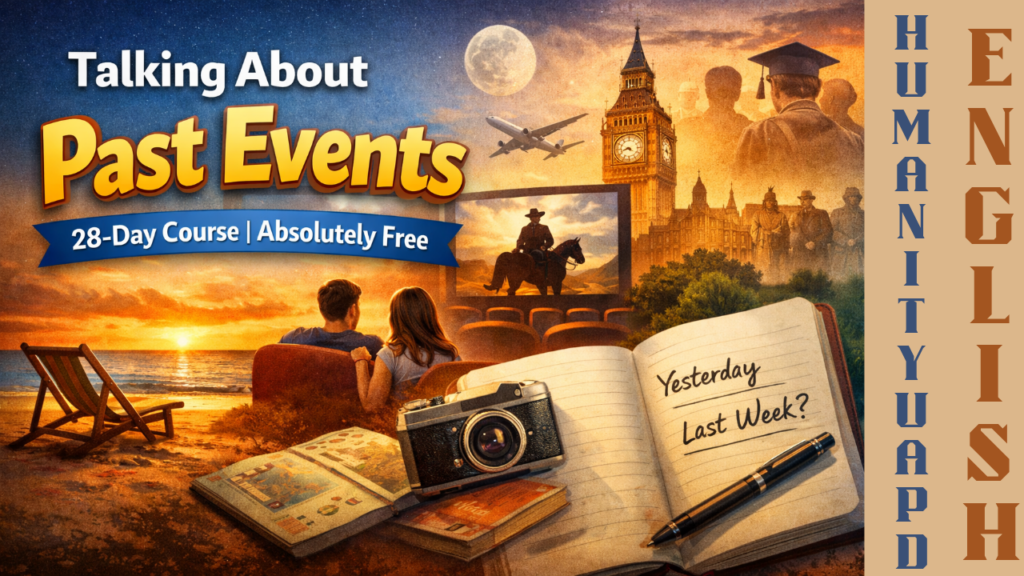
Talking About Past Events
Past events are significant moments or occurrences that have taken place in a time frame prior to the present. These events could range from simple happenings, such as enjoying a meal yesterday, to major occurrences like historical milestones that shaped our society. Understanding past events is crucial because they provide context and insights into our current conditions and societal development.
When we refer to past events, we often think of specific days or periods, such as last week, last month, or even many years ago. For instance, if someone mentions a vacation they took in the previous summer, they are sharing a past event. It is essential to recognize that the description and context of these events can vary greatly. Some might evoke feelings of joy and accomplishment, while others might bring sadness or reflection.
One significant aspect of past events is how they influence our present and future. Our memories of what has happened can shape our decisions and perspectives. For example, past successes often motivate us to strive for similar achievements, while losses might teach valuable lessons that guide our future actions. Furthermore, recounting these past experiences fosters communication and connection among individuals, creating shared narratives.
In summary, past events serve as a foundation for understanding our personal journeys, collective histories, and the evolution of cultures. By discussing and reflecting on these events, we can gain a deeper appreciation for the present and better prepare for what lies ahead.
👉 Table of Contents 👇
Common Simple Past Verbs
Understanding the simple past tense is crucial for discussing events that have already occurred. In this section, we will explore several common verbs that are frequently used to express past actions. Familiarizing oneself with these verbs can greatly enhance language comprehension and expression.
One of the most widely used verbs in the simple past tense is “went”. This verb indicates movement or travel in the past. For example, “I went to the store yesterday” clearly conveys that the action took place at a specific time in the past.
Another important verb is “ate”, which relates to the action of consuming food. An illustrative sentence could be, “She ate a delicious meal last night”. This example highlights not only the action but also the context in which it occurred, making it easier to visualize the situation.
The verb “saw” is also essential for referencing visual experiences or events from the past. For instance, one might say, “They saw a movie over the weekend”, effectively placing the audience in the past moment of watching a film.
Moving on, the verb “did” is instrumental for performing tasks or activities in the past. An example could be, “He did his homework after dinner”, illustrating the completion of a specific action.
Finally, the verb “was” serves as a state-of-being verb that describes a condition or situation. The sentence, “We were happy at the party last week” indicates a past state of emotion experienced during a specific event.
Incorporating these verbs into language practice is key for developing proficiency in discussing past events. Whether traveling, dining, viewing, accomplishing, or just existing, these verbs form the foundation of narrative expression in the simple past tense.
Talking About Yesterday
When discussing events that occurred yesterday, it is important to formulate sentences that clearly express these experiences. Utilizing the past simple tense is a common method to narrate actions that happened recently. Below are a few examples of sentences that illustrate how one might talk about their day, particularly focusing on ordinary activities.
Firstly, a straightforward example is: “I went to the store yesterday.” This sentence succinctly conveys that the action of going to the store took place in the recent past. Such sentences are effective in everyday conversations or casual recounting of activities.
Another example might be: “I ate pasta for dinner last night.” Here, the sentence communicates not only the food consumed but also specifies the timing, syncing the action with a particular time reference, which is last night. This helps provide clarity and context to the listener, making it easier to visualize the experience.
Additionally, one can express experiences involving leisure activities, such as: “I watched a movie with my friends yesterday.” This highlights social interaction and personal engagement, which is often a key aspect of daily life. Mentioning companions adds depth to conversations, inviting further discussion about friends and shared experiences.
Overall, when we engage in conversations about occurrences from the previous day, we create a clearer narrative by using simple past tense constructions. These straightforward examples serve as foundational templates for anyone looking to enhance their conversational skills regarding past events, making it easier to recount daily experiences and maintain engaging dialogues.

Recalling Last Week
Reflecting on past events is an essential exercise in language learning, particularly when utilizing the simple past tense. To engage in this activity, let us begin by encouraging learners to consider the different activities they undertook during the previous week. For instance, one might say, “I worked on a project”. This sentence encapsulates not only an action but also implies the effort and time devoted to a specific task. It exemplifies how the simple past tense is employed to discuss completed actions.
Another example to contemplate could be, “I visited my friend”. This statement illustrates a social interaction that likely brought joy and connection. By analyzing such sentences, learners can better grasp how the past tense operates within the English language. They should also think about their own experiences from the last week, allowing them to form their unique sentences.
When practicing, learners can use prompts to further develop their sentences. Consider questions like, “What project did you work on?” or “Who did you visit?” Responses to these prompts might include specific details, such as, “I worked on my final presentation for a class” or “I visited my friend Sarah at her new apartment.” By incorporating specific information into their sentences, learners not only practice the verb forms but also enhance their vocabulary and ability to describe events.
Ultimately, encouraging learners to reflect on their past week fosters both confidence and competence in using the simple past tense. As they articulate their experiences, they build on their language skills, gaining fluency in recounting life events.
Describing a Past Trip
Sharing experiences from a past trip can be an enriching way to engage in conversation and to reflect on memorable adventures. When recounting a travel experience, it’s useful to provide details that evoke the essence of the trip, enabling listeners to visualize the journey alongside you. A simple yet effective approach to describe your past trip is to focus on specific locations and activities you engaged in.
For instance, you might say, “I visited the beach during my last vacation.” This sentence effectively highlights a key aspect of your trip while prompting further interest. To enhance the narrative, consider adding sensory details. You could elaborate by stating, “The sand beneath my feet was warm, and the sound of waves crashing created a calming atmosphere.” This specific imagery can transport your audience to that moment.
Another method to keep the conversation engaging is to mention activities you participated in. Rather than simply stating, “I saw interesting places,” you could describe, “I explored a vibrant market where the colors of fresh fruits and vegetables were truly spectacular.” This not only paints a picture but also reflects the unique experiences that you encountered during your trip.
Additionally, reflecting on your feelings during the trip can provide depth to your narrative. For instance, you might say, “As I hiked up the mountain, I felt a sense of accomplishment and wonder at the breathtaking views.” This personal emotional resonance allows your audience to connect further with your story.
In conclusion, sharing past travel experiences involves articulating not just the places you visited but also the emotions and sensations associated with those experiences. Describing your past trip vividly can inspire and delight your listeners, making them feel as if they have traveled alongside you.
Common Mistakes to Avoid
When discussing past events, it is common for learners of a new language to make several mistakes that can hinder effective communication. One prominent issue is failing to change verbs to their past forms. For example, a beginner might say, “I go to the park yesterday” instead of the correct form, “I went to the park yesterday.” The use of the present tense verb ‘go’ contrasts with the time frame signaled by ‘yesterday,’ leading to misunderstanding.
Another frequent mistake involves using the wrong auxiliary verb. For instance, many learners will say, “I have seen that movie last week,” when the correct phrase should be, “I saw that movie last week.” In this case, ‘have seen’ unnecessarily complicates the sentence structure and introduces a tense inconsistency, as ‘last week’ indicates a completed action rather than a present perfect state.
Additionally, learners sometimes struggle with time indicators that clarify when the event took place. Phrases like “two days ago” or “last month” should prompt the speaker to use the simple past tense. For instance, one might incorrectly state, “I was cooking dinner two days ago,” when it should read, “I cooked dinner two days ago.” Overlooking the correct tense can make the sequence of events unclear.
As learners practice, it is essential to be mindful of these aspects. Paying attention to verb conjugations and tense consistency significantly enhances one’s ability to discuss past events accurately. Making these adjustments can improve clarity and leave less room for confusion in communication, which is crucial for effective learning.
Speaking Practice: Share Your Past
Engaging in speaking practice is an essential component of language learning, particularly when discussing past events. To enhance your speaking skills and boost your confidence, we recommend a straightforward activity where learners can share their recent experiences. By focusing on what they did yesterday or last week, participants can practice speaking about personal anecdotes, which allows for a deeper connection with the language they are learning.
Begin by pairing with a partner, ideally someone with whom you feel comfortable conversing. Each participant should take turns talking for a few minutes about their past week. It is helpful to use guiding questions to stimulate conversation. For example, you might ask each other, “What was the most interesting thing you did last week?” or “Did you try any new activities or visit any new places?” These prompts encourage detailed responses and prevent the dialogue from stagnating.
As learners share their experiences, it is important to focus on using past tenses correctly, as they will need to convey events that have already occurred. Encourage the use of descriptive language to make the stories more engaging. This includes the use of adjectives and adverbs that can help paint a vivid picture of their experiences. Moreover, it is beneficial to listen attentively when your partner is speaking, as this practice will improve your listening skills and comprehension.
Ultimately, this speaking activity not only provides an opportunity to practice past tense verbs but also fosters a supportive environment where learners can build confidence while communicating in English. Regularly engaging in such practices will significantly enhance your fluency and speaking abilities over time.
Writing Practice: Craft Simple Sentences
One effective way to enhance your writing skills, particularly in discussing past events, is through the practice of crafting simple sentences. This exercise not only reinforces your understanding of verb tenses but also encourages clarity and conciseness in your writing. To engage with this exercise, consider a recent event from your life. Specifically, reflect on what you did last weekend or recall a memorable experience. Once you have chosen your subject, try to encapsulate the essence of your activities in three straightforward sentences.
For example, if you went hiking, you might express your experience with sentences like: “I went hiking in the mountains last weekend. The weather was perfect, and the view was breathtaking. I felt a sense of peace and accomplishment at the summit.” This approach allows you to practice using the past tense effectively while also ensuring that each sentence conveys a single idea.
While crafting these sentences, focus on incorporating sensory details and emotions to enrich your narrative. This not only makes your writing more engaging but also helps establish a deeper connection with the reader. For instance, instead of simply stating what you did, consider adding descriptive phrases. Instead of saying, “I had lunch,” you could say, “I enjoyed a delicious picnic on the hillside, savoring every bite of my homemade sandwich.” Such details make your sentences more vivid and impactful.
As you complete this exercise, remember that practice is key to improvement. The more you write, the more comfortable you will become with sentence structure and past tense verbs. This simple yet effective writing practice will enhance your ability to communicate past events clearly and thoughtfully, making your writing both enjoyable and informative.
Conclusion and Encouragement
In conclusion, discussing past events is a vital skill that can significantly enhance your conversational abilities in English. Throughout this blog post, we explored the various aspects of talking about the past, including how to structure sentences correctly and the use of appropriate tenses, such as the simple past, past continuous, and present perfect. By practicing these concepts, learners can develop a stronger command of the language, making their conversations more engaging and informative.
It’s essential to remember that like any other skill, confidence in discussing past events in English comes with practice. Engaging with different contexts, whether through storytelling, sharing personal experiences, or discussing historical events, allows you to apply the learned grammatical structures and vocabulary seamlessly. This practice not only reinforces language skills but also familiarizes you with conversational nuances.
We encourage you to take the insights gained from this blog post and incorporate them into your everyday conversations. Whether you are speaking with friends, participating in discussions, or even practicing alone, use the tools and techniques outlined to enhance your fluency. The more you engage in these practices, the more natural speaking about past events will become.
Ultimately, talking about the past can be a rewarding experience that fosters deeper connections through shared narratives. With dedication and consistent practice, you will find that communicating in English becomes easier and more enjoyable. Embrace the journey, and let your stories unfold with confidence!
Frequently Asked Questions (FAQs)
What does “talking about past events” mean in English?
Talking about past events means describing actions, experiences, or situations that already happened before the present time, usually using past tense verbs.
Which tense is most commonly used for past events?
The simple past tense is the most commonly used tense for describing completed actions in the past, such as went, ate, saw, did, and was.
How can I talk about something I did yesterday?
You can use a simple sentence in the past tense, like:
– I went to the market yesterday.
– I watched a movie last night.
Why is learning past tense important?
Past tense helps you share experiences, tell stories, and communicate clearly about things that already happened in your life.
What are common mistakes when talking about past events?
Common mistakes include:
– Using present tense instead of past tense
– Forgetting to change irregular verbs (go → went, eat → ate)
– Mixing different tenses in one sentence
How can I practice speaking about past events?
You can:
– Talk about your yesterday or last week
– Share a past trip or memory
– Practice speaking with a friend or partner
How can writing help me improve past tense?
Writing short sentences about recent experiences helps you:
– Remember verb forms
– Improve grammar accuracy
– Build confidence in English communication
Can beginners easily learn to talk about past events?
Yes. By learning basic past verbs, practicing simple sentences, and speaking regularly, beginners can quickly become comfortable talking about the past.
What is an easy exercise to start today?
Write three simple sentences about what you did last weekend.
Example: I visited my friend. We ate dinner together. I felt happy.
How long does it take to become confident in past tense?
With daily practice, many learners notice improvement in a few weeks, especially when speaking and writing regularly.

Share this:

